Enzo
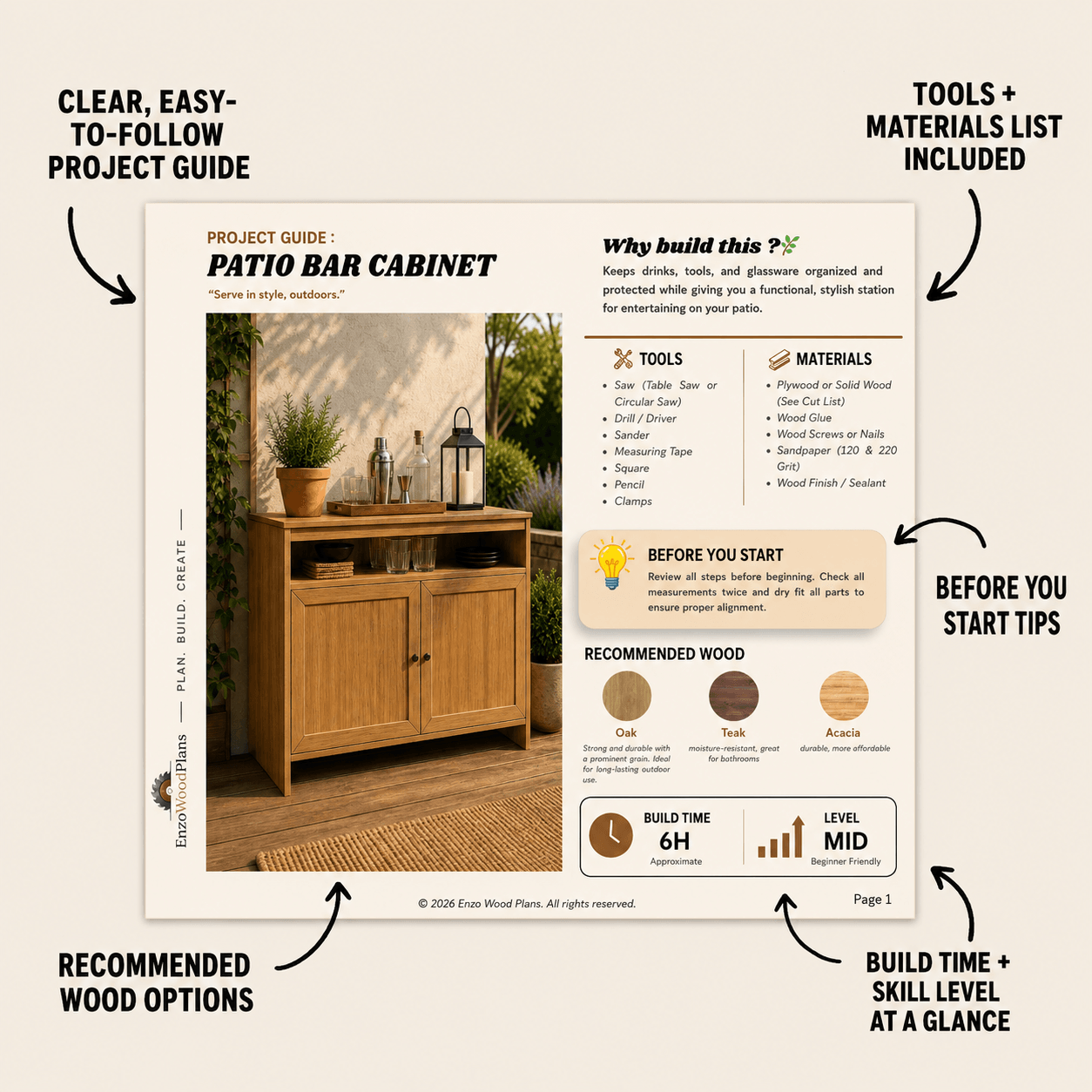
The Precision Plan Vault - Woodworking Plans
The Precision Plan Vault - Woodworking Plans
Couldn't load pickup availability
You're Not a Bad Woodworker.
You've Just Been Following Bad Plans.
Introducing The Precision Builder's Collection — 140+ real-world tested woodworking plans, a no-fluff craftsman's reference, and the only woodworking bundle that shows you how to turn your builds into income.
- ✓ 140+ plans — every cut, every measurement, every step
- ✓ Dual measurements: inches & centimetres
- ✓ Instant PDF download — build today
This was built for the builder who already knows what they're doing.
You've been at this for a few years now. You've built things you're genuinely proud of — a bookcase that's still standing, a dining table your family eats at every night. You know your way around a miter saw. You can read a cut list.
But here's what keeps happening:
You find a plan online — one that looks right. Maybe you even pay for it. You get into the build and somewhere between step 3 and the final assembly, something doesn't add up. A measurement that contradicts itself. A joinery detail that's drawn but never explained. A material list that's off by a board foot.
You spend more time deciphering the plan than building from it. You waste a panel you can't get back. And in the back of your mind — even though you know better — you wonder if maybe you're the problem.
You're not.
The plan was never tested in a real workshop. That's the truth the woodworking plans market doesn't want to admit: most plans online are assembled, not built. Designed to look complete. Never actually cut, glued, and assembled by the person who wrote the instructions.
Every plan in this collection has been verified in a real build — dimensions checked against actual lumber, sequences confirmed against real assembly. Because a plan that hasn't been built isn't a plan. It's a diagram with optimism attached.
Three things that are quietly costing you in the workshop right now.
1. Plans that were never tested on real wood.
Most online plans are drafted in software by people who haven't lifted a hand plane in years. Dimensions look clean on screen. In the shop, they don't match the lumber you actually bought. You spend the first hour of every build catching errors that should have been caught before the file was ever published.
2. "Beginner-friendly" language that treats you like you've never held a chisel.
You don't need to be told what a dovetail joint is. You don't need a six-paragraph explanation of why sanding matters. But every plan pack on the market is written for someone who just watched their first YouTube video. The result: you skim past the hand-holding looking for the actual information — and half the time it isn't there.
3. Skills you can't monetise.
You're building furniture that sells for $800 in a shop down the road. You're producing pieces people ask to buy. But you have no system for pricing, no way to write a listing, no idea which projects are worth your time. The skill is there. The business layer isn't. No one in this market has ever tried to give it to you.
Introducing The Precision Builder's Collection.
A complete woodworking plan system built for the craftsman who's past the beginner stage — and ready to build with precision, depth, and the option to profit from what they make.
Here's everything you get:
Core — Item 1 of 2
The Precision Plan Vault
140+ detailed woodworking plans PDF — every cut, every dimension, every joinery note. Nothing assumed. Nothing skipped.
These aren't plans assembled from a Google image search. Each one has been built, adjusted, and confirmed against real-world lumber and real-world tools before it was ever written down.
What makes these plans different from everything else on the market:
- Dual measurements on every plan. Inches and centimetres side by side — no conversion tables, no calculator, no errors from rounding. Whether your shop runs metric or imperial, you build the same way.
- Complete cut lists. Not partial ones. Every component listed. Every material quantified. You buy exactly what you need and nothing you don't. No more overbuying because the plan "forgot" a rail.
- Detailed joinery notes on every assembly step. Mortise depth. Tenon shoulder length. Dovetail angles. The details experienced builders actually need — written in the language of someone who has made these joints, not just drawn them.
- 3D visual exploded views. See how every part relates to every other part before you cut anything. No more halfway-through surprises.
- 140+ plans across every category. Indoor furniture, outdoor builds, storage, workshop jigs, decor. Projects that range from a confident two-day build to a serious two-week piece worth serious money.
The reason most woodworking plan packs fail serious builders is not the number of plans — it's the depth of each one. A thousand plans that skip assembly details are worth less than ten that get you all the way to a finished piece. This vault was built on that principle.
The Craftsman's Compendium
The no-fluff woodworking reference written for builders who already know what they're doing — and want to know it better.
This is not a beginner's guide. It doesn't explain what sandpaper is or why you should wear safety glasses. What it does is go deep on the things that separate competent woodworkers from exceptional ones — the decisions that happen before the first cut, and the techniques that make every joint tighter, every surface cleaner, every project faster to complete.
- Tools — the full reference. Not "what is a router." The real information: setup, calibration, feed rates, jig configurations, what to reach for and when. The kind of reference you actually want on your workshop shelf.
- Joinery deep-dives. Mortise and tenon variations. Dovetail proportions. Box joints. Biscuits, dowels, pocket screws — when each is appropriate and how to execute each one with precision.
- Wood selection and behaviour. How different species move with humidity. Which wood to use for which application. How to read grain direction before it reads you. The information that prevents expensive mistakes on expensive lumber.
- Finishing techniques — proper ones. Surface preparation. Grain filling. Stain behaviour on different species. Film finishes vs. penetrating oils. The finishing section alone is worth the price of this collection.
- Workshop layout and workflow. How to sequence a build to minimise setups. How to set up your shop for efficiency when space is limited. The process behind completing projects faster without cutting corners.
Retail value: $47
Free Bonus — worth $67, yours at no extra cost
The Workshop-to-Market Blueprint
The only woodworking resource in this market that answers the question every serious builder eventually asks: "How do I actually get paid for this?"
Every competitor in this space sells you plans. None of them have ever thought about what happens after you build the piece.
You've spent a weekend building something that a furniture shop would sell for $600. You know it. You've heard it from people who've seen your work. But you have no system for pricing it fairly, no way to write a listing that gets attention, no idea which projects are worth your time versus which ones will barely cover your materials.
The Workshop-to-Market Blueprint closes that gap. It's a complete business layer built specifically for woodworkers who want to sell what they make — whether that's on Facebook Marketplace, Etsy, at a local market, or to private clients.
- Profit Pricing Calculator. Enter your materials cost, time, and target hourly rate. Get a price that's fair to you and credible to buyers — every time. No more undercharging because you guessed.
- Facebook Marketplace Listing Templates. Ready-to-use copy for the 15 most common woodworking items buyers are searching for right now. The words that get messages, not silence.
- Professional Invoice Template. Look like a business from the first sale. Client-ready, editable, and formatted to ensure you get paid on time.
- 90+ Projects That Actually Sell. A curated, market-researched list of woodworking items buyers are actively purchasing. Not what's popular on Pinterest — what people are pulling out their wallets for. Ranked by margin and build time so you can decide which projects deserve your weekend.
"The difference between a woodworker and a woodworking business is usually just a price list and a listing that actually gets read."
The Master Builder's Inspiration Archive
60 curated woodworking magazine issues — decades of craft thinking, technique, and project inspiration in one permanent library.
Magazines are where serious woodworkers have always found the builds that push them — the project that introduces a new joinery method, the technique article that changes the way you use a tool, the furniture piece that makes you want to clear your bench for a month and make something exceptional.
A subscription to a single woodworking publication runs $30–$60 a year. This archive delivers 60 complete issues — years of editorial content from working craftsmen — as a permanent reference you own outright.
- 60 full woodworking magazine issues — available immediately on download
- Advanced technique deep-dives, tool reviews, joinery showcases
- Project plans and builds from professional craftsmen at every level
- Finishing, restoration, hand tool and power tool coverage
- Years of serious editorial thinking about the craft — a library, not a freebie
Share